“The consequences of that election have not persuaded America’s (predominantly left-leaning) millennial nonvoters of the importance of political participation. A new survey from PRRI and The Atlantic suggests that only one-third of 18-to-29-year-old voters are certain to cast ballots next month. Among Donald Trump’s cohort, that figure is 81 percent.”
I found this MBTA infographic I made for an environmental biology class ages ago, so I figured I may as well share it, before I forgot about it again.
Even unknowing violations can net you up to a $15,000 fine. Put the damn bird bits back.
This is really well done, @rotreat! Thanks for putting it on tumblr.
The MBTA is probably the hardest federal wildlife protection law to convince people to follow in modern times. Nobody quibbles over the Endangered Species Act and the restrictions it imposes, but telling people shouldn’t be taking home bird bits they find in the woods ends up being incredibly contentious. I get it: it can seem pretty extreme to say nobody can have pieces of protected birds that they found on the ground or that died naturally. But there’s still actually really good reasons to respect the full breadth of the MBTA’s restrictions.
The MBTA was originally enacted to prevent unsustainable hunting practices because, as @rotreat noted, even huge populations were being decimated without federal protection. For things like this:
The provision against owning parts of restricted species – even found bits – was included to prevent people passing off poaching as lucky acquisitions. And it worked: the snowy egret, which was almost extinct at the time the law was passed, made a dramatic recovery once possession of it’s beautiful feathers were outlawed; the trumpeter swan population, which was down to 70 individuals in the continental United States, was able to recover to a population of “least concern” today due to the cessation of hunting and the introduction of new birds from an Alaskan population.
Poaching birds may sound like an old-timey problem, but it’s actually still a current one; I’ve personally come across people selling perfect and undamaged songbird parts en mass, and they got really angry when I asked to see the requisite paperwork before claiming they were all “found” specimens. People like @kaijutegu who work under an MBTA permit can corroborate the fact that it’s still a genuine issue – even just the frequency with which things made from protected species show up on Etsy and Craigslist is a pretty reasonable indicator. When someone picks up found feathers or bird bones, there’s no way for the people in charge of enforcing wildlife law to tell you haven’t poached them; and the more people ignore the law and normalize keeping found bird bits, the easier it is for the actual poachers to hide their actions.
This all makes good sense when you’re sitting here reading it, but I know feels less relevant when you’re looking at a perfect feather or a really cool skull on the ground in front of you. It’s hard to see why taking just one wouldn’t hurt. You know you’re not a poacher, and you know you’re being ethical about what you collect, right?
What’s important to keep in mind is that ethical collecting is perfectly good, but the currently regulations are in place to make sure we aren’t taking so much that we hurt the ecosystem – and if you feel that just you taking something won’t overdo it, you are one of many people who may have the same thought. Those feathers and those small bird carcasses are actually really crucial to the continued health of the ecosystem, and when we take them away because we think they’re pretty, we do damage we don’t intend. Shed feathers are important nesting material for other birds; in absence of dropped feathers birds are more likely to use plastic or other anthropogenic waste to build their nests, which raises chick mortality rates due to ingestion or entanglement. Unused feathers become food for beetles and moths, or decay and help replenish the soil by providing large amounts of nitrogen. Bird carcasses are great sources of food for scavengers and insects, and their tiny, crunchable bones provide easy access to calcium for all sorts of species. When undisturbed by human collection – even in areas with no naturally occurring scavengers – dead birds will be gone in days, having been fully utilized by all the other inhabitants of that ecosystem. When people keep the cool bird bits they find, they’re removing that resource from the animals that might depend on it. If everyone decides keeping one little specimen won’t hurt because it’s just them, very quickly, there won’t be anything left – and when we remove the resources animals need from their habitat to that degree, we force them to rely on less suitable and sometimes even dangerous replacements.
Even though the MBTA can feel older and less relevant than other federal wildlife laws (after all, it was written because of passenger pigeons), it really is still a law whose restrictions are worth following. The birds covered by the MBTA are still absolutely in need of protection. Habitat destruction for recreation or profit, loss of habitat to invasive species, pollution, and now climate change all threaten migratory bird species in modern North America. The last thing these birds need is more threats to their survival, and even small things like the removal of nesting material or increase desirability to the people who are willing to actually poach them can do a lot of damage. Pressure from things like taking found bird parts occurs in infinitesimally small amounts – to where you, as a person playing a role in it, probably won’t perceive it happening – but a million incremental increases still cumulatively have a lot of impact.
I understand how tempting it is to keep bird parts – they’re beautiful – but please, just take a photo, and then put them back. If you love the birds they came from, the best thing you can do for them is to make a choice to not perpetuate threats to those species. Each person who chooses to take a feather or a bone is contributing to the struggles migratory birds face, but every person who chooses to admire found parts in-situ and leave them be is not just adhering to federal law – you’re actively facilitating the continued survival of irreplaceable bird populations.
Snowy egret chicks, like these dudes here, thank you.
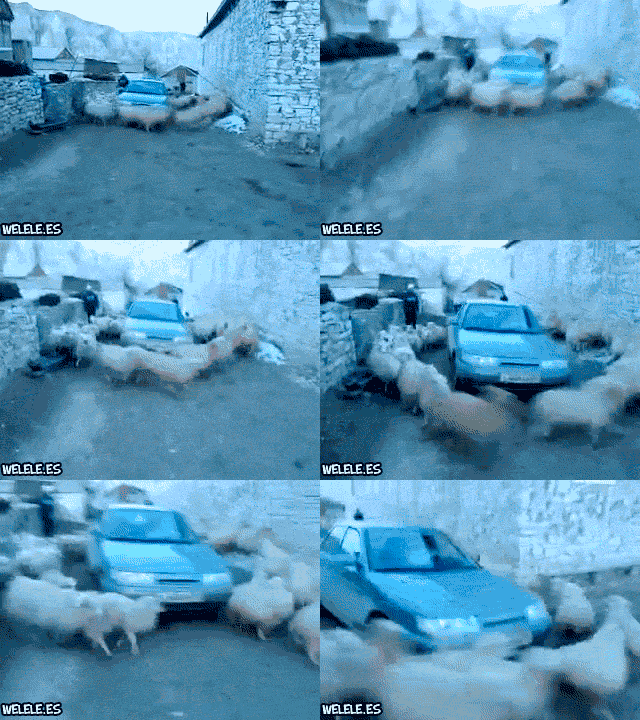
Reblogging this again because Chris just made me realize that sheep are so stupid that I can’t even think like them:
These sheep? They are actually running away from the car.
They are so stupid that they’re following each other in a circle around the thing they are running from.
SHEEPNADO
when your group cohesion is set higher than your flee response distance.
Moshpit
This is actually called a sheep cyclone and it happens because sheep don’t have a hierarchy. In most herds, whichever animal is the leader will sense danger and take off running. The rest of the herd takes it’s cues from the leader and follows. Sheep, on the other hand, don’t have a leader. If the flock runs, they run, and they follow whatever fluffy tail happens to be in front of them. Usually, this works out fine for the sheep. Occasionally, however, the sheep in the front starts following the fluffy tail of the sheep in the back so the whole flock ends up running in circles, going nowhere fast.
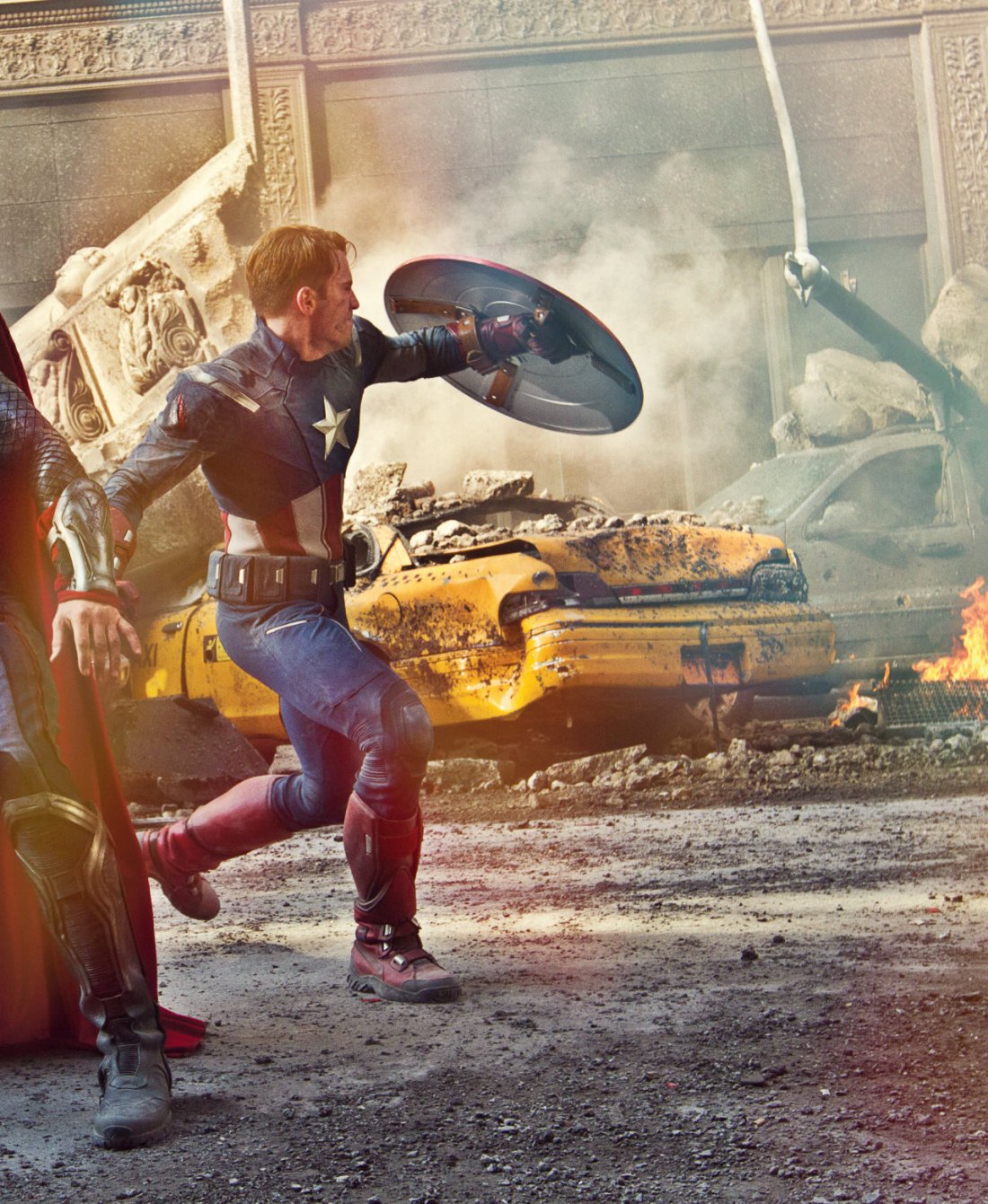
Reputedly a scene was filmed where during the final battle Captain America saves an old man trying to protect his grandchildren. He tells him to ‘Get them to cover’ but as he walks away the old man asks him “Cap, is that really you?’. He turns and noting the man’s World War 2 veteran lapel pin trades salutes with him. As Captain America sprints away the children ask their grandfather ‘Do you know him?’ and he replies ‘We all know him’.
Anytime anyone says that Coraline is a Tim Burton film I feel myself exit my physical body and enter a spiritual world of disappointment only discoverable by those who feel an utter bitterness towards the fact that Henry Selick never gets the recognition he deserves despite being a better director than the man who’s constantly mistaken as the creator of his works
this had 68 notes yesterday I’m glad it got more popular on halloween
when i say “unfollow me if you support trump” im not saying it ironically. no, seriously, if you support trump then i dont want your disgraceful ass to be in any way associated with my blog. get out.




 The-Lounge