There is so so so much theory and technical stuff that goes into this whole process of “grayscale to color” painting (which I absolutely love).
Oil Painting
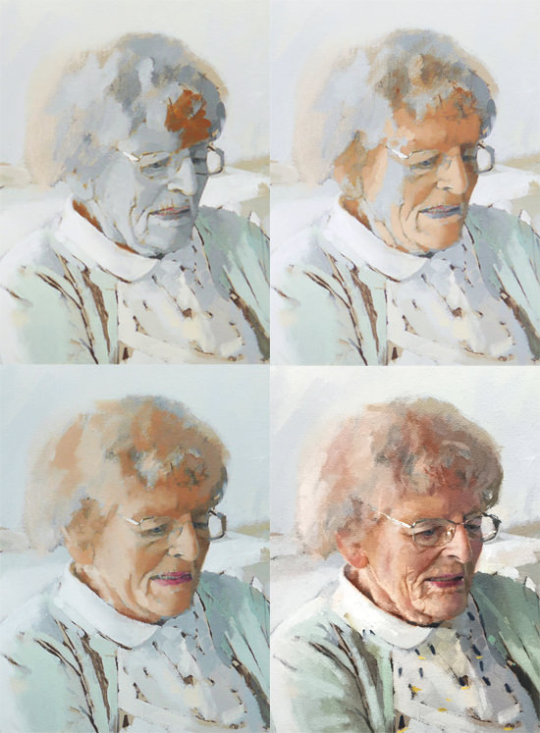
I assume you’re talking about digital painting, but let’s talk about traditional oil painting first! In oil painting, there’s a process called “glazing”. The artist will lay down monochromatic values for a basic layout (usually in either grey or a sienna brown, which is more useful for laying down a base for skin tones). Then, with thin layers of the desired color, they will “glaze” over the underlayer, combining value with color. Glazing is a very subtle technique, but that’s what makes it so great. The subtle shifts and layers of color give the painting “life”.
(img. credit: willkempartschool.com)
Digital Painting
Just like in oil painting, the point of painting in grayscale first is to achieve really distinct values first before adding color. For some, dealing with value and color at the same time will be too overwhelming and not achieve the same effect.
Different colors correspond to different values. As you can see, yellows are super light while blues get super dark.
(img credit: ConceptArt.org)
There is a downside to doing it this way, and you’re right: it does take longer to first paint it in grayscale and then add color onto it.
He goes over the ‘why’ of using grayscale much more thoroughly than I did, gives a demo, and states why he feels this is an ineffective way of painting.
He makes an excellent point of how we don’t perceive color in terms of value, and therefore why it is hard to translate grayscale to color, or vice versa.
All in all, my personal opinion is that for an artistic process, grayscale-to-color painting is a bit tedious and creates more of a problem than it does solve one. Instead, studying value maps and doing monochromatic studies can improve your use of value within a color piece.
I hope this was helpful in clearing up why artists paint in grayscale before using color! Grayscale is helpful in studying value and clearly showing lighting on a piece. 3D modelers and designers may use grayscale in their pieces because they want to focus on the form and not color. It all depends on what your use and purpose is!


 The-Lounge